Publications Key Insights
Data is central to EduFinance’s work. Through rigorous data analysis and monitoring results, we are able to identify key areas of success, points for improvement and generate new ideas efficiently. In addition to publishing larger research studies, we want to share these key insights resulting from our ongoing data analysis, recognizing that lack of data is often a barrier to developing new, evidence-based innovations that can collectively benefit the global education sector.
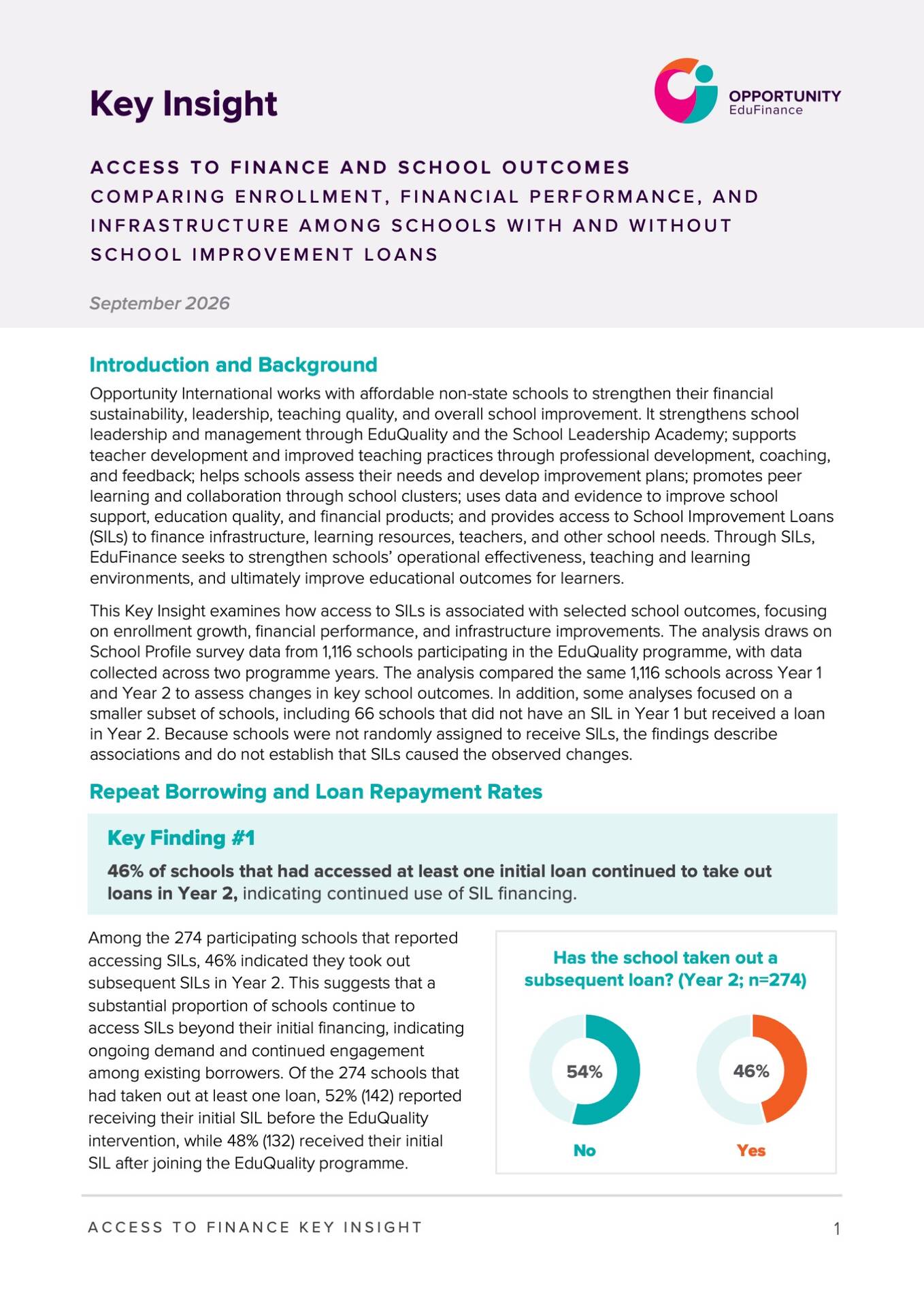
Access to Finance and School Outcomes
This Key Insight explores the relationship between access to School Improvement Loans (SILs) and school outcomes, examining changes in enrolment, teacher recruitment, financial performance, and infrastructure among 1,116 affordable non-state schools across two programme years. The findings highlight continued demand for school financing and associations with improvements in selected areas, while noting that the results do not establish causation.
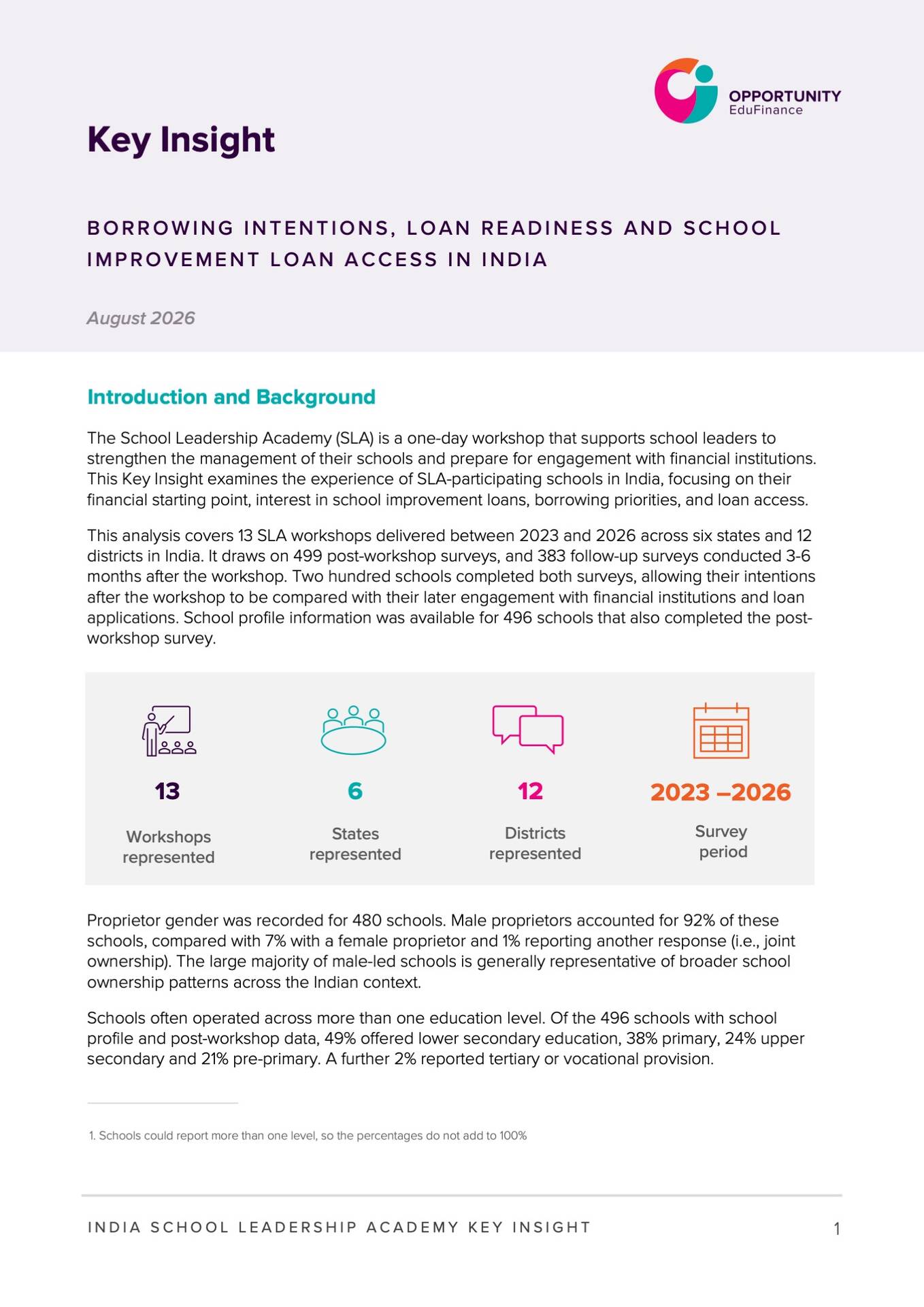
Borrowing Intentions, Loan Improvement, Loan Access, and Readiness in India.
This Key Insight examines how the School Leadership Academy (SLA) is influencing schools’ readiness and interest in accessing finance in India. Drawing on data from 13 workshops across six states, it highlights a significant increase in schools’ intention to borrow, their financing priorities, early engagement with financial institutions, and the barriers that remain to turning borrowing intentions into actual loans.
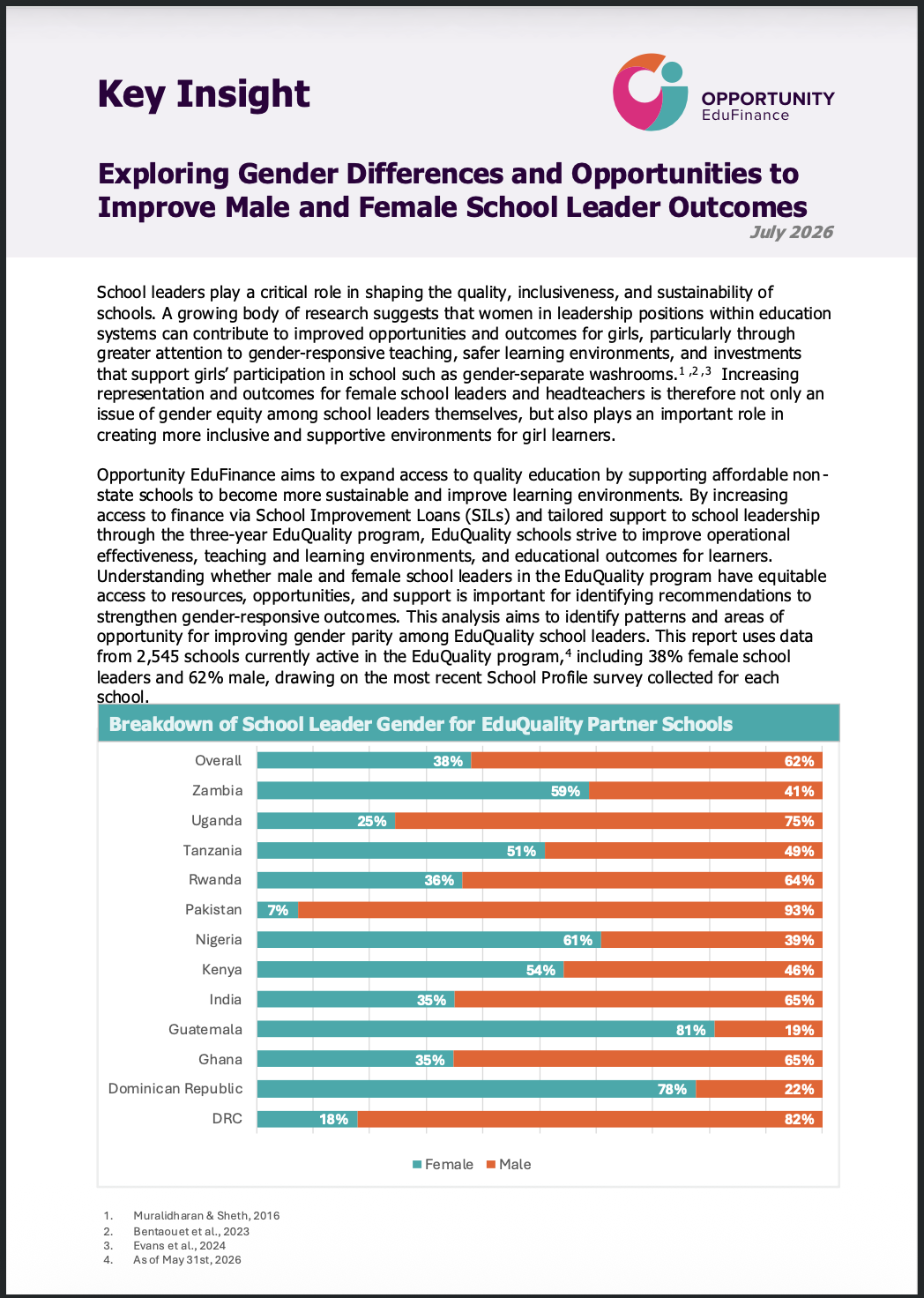
Exploring Gender Differences and Opportunities to Improve Male and Female School Leader Outcomes
Our latest Key Insight explores gender parity, operational practices, financial dynamics, and infrastructure conditions across 2,545 active EduQuality partner schools in 12 low and middle-income countries, using data collected through May 2026. The study sample comprises 38% female school leaders and 62% male school leaders, providing a unique opportunity to examine differences in school leadership and performance. The findings reveal distinct patterns between female-led and male-led schools. While male-led schools tend to be larger and operate with higher pupil-to-teacher ratios, female-led schools are more likely to employ female staff, access School Improvement Loans, diversify their income streams, and benefit from stronger infrastructure conditions, including lower levels of classroom congestion. These insights contribute to a deeper understanding of how leadership gender influences school operations, resource management, and learning environments across diverse educational contexts. Click the link below to read and download the full report on our website.
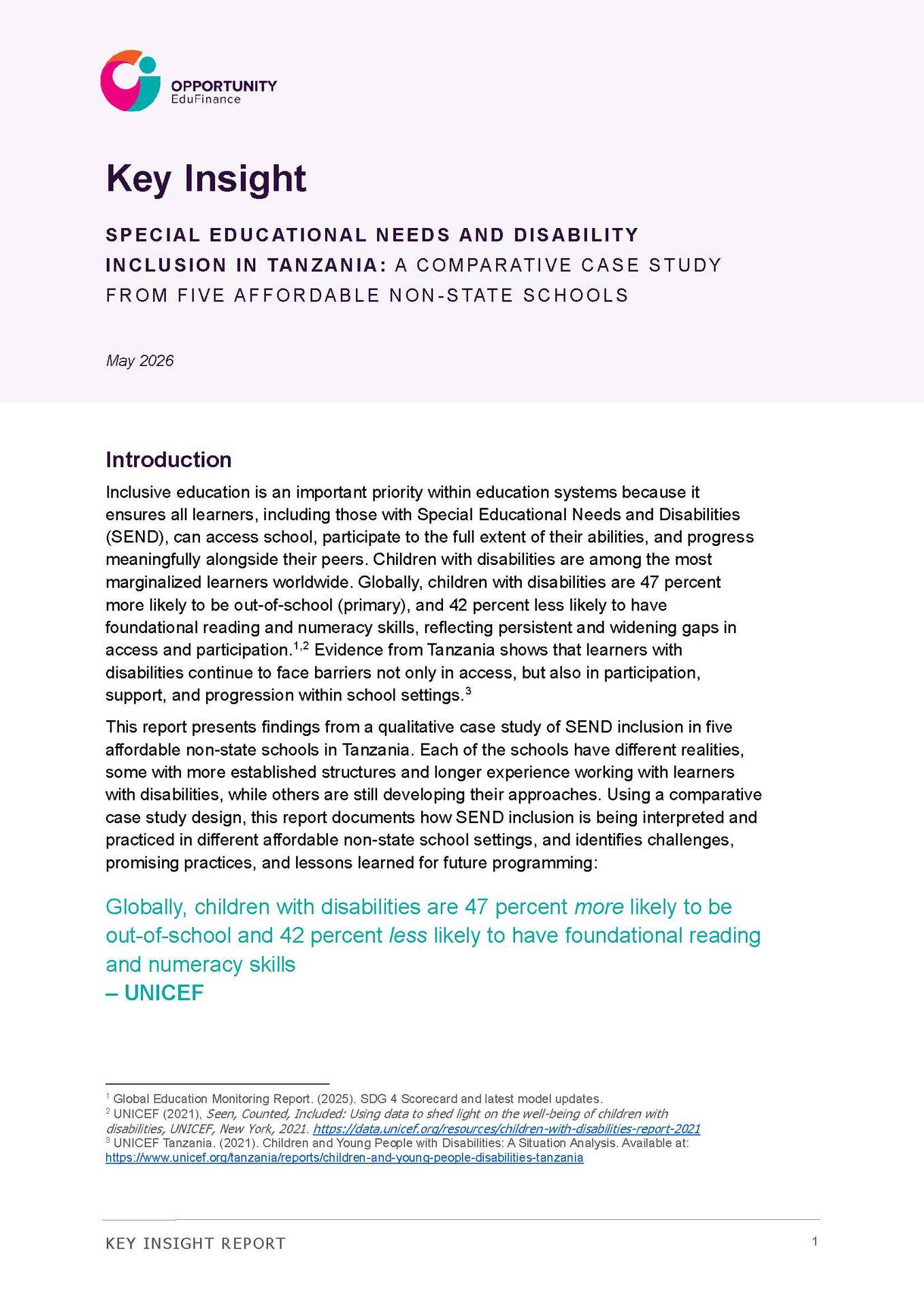
Special Educational Needs and Disability Inclusion in Tanzania: A Comparative Case Study from Five Affordable Non -State Schools
This study explores the state of Special Educational Needs and Disability (SEND) inclusion in Tanzania, focusing on a comparative analysis of five affordable non-state schools. It examines how these schools identify, support, and integrate learners with diverse needs, highlighting both challenges and effective practices. The research provides insights into access, teaching strategies, resource availability, and institutional approaches to inclusive education within low-cost private schooling contexts. By comparing multiple schools, the study offers practical recommendations for improving inclusive education and strengthening support systems for children with disabilities in similar settings.
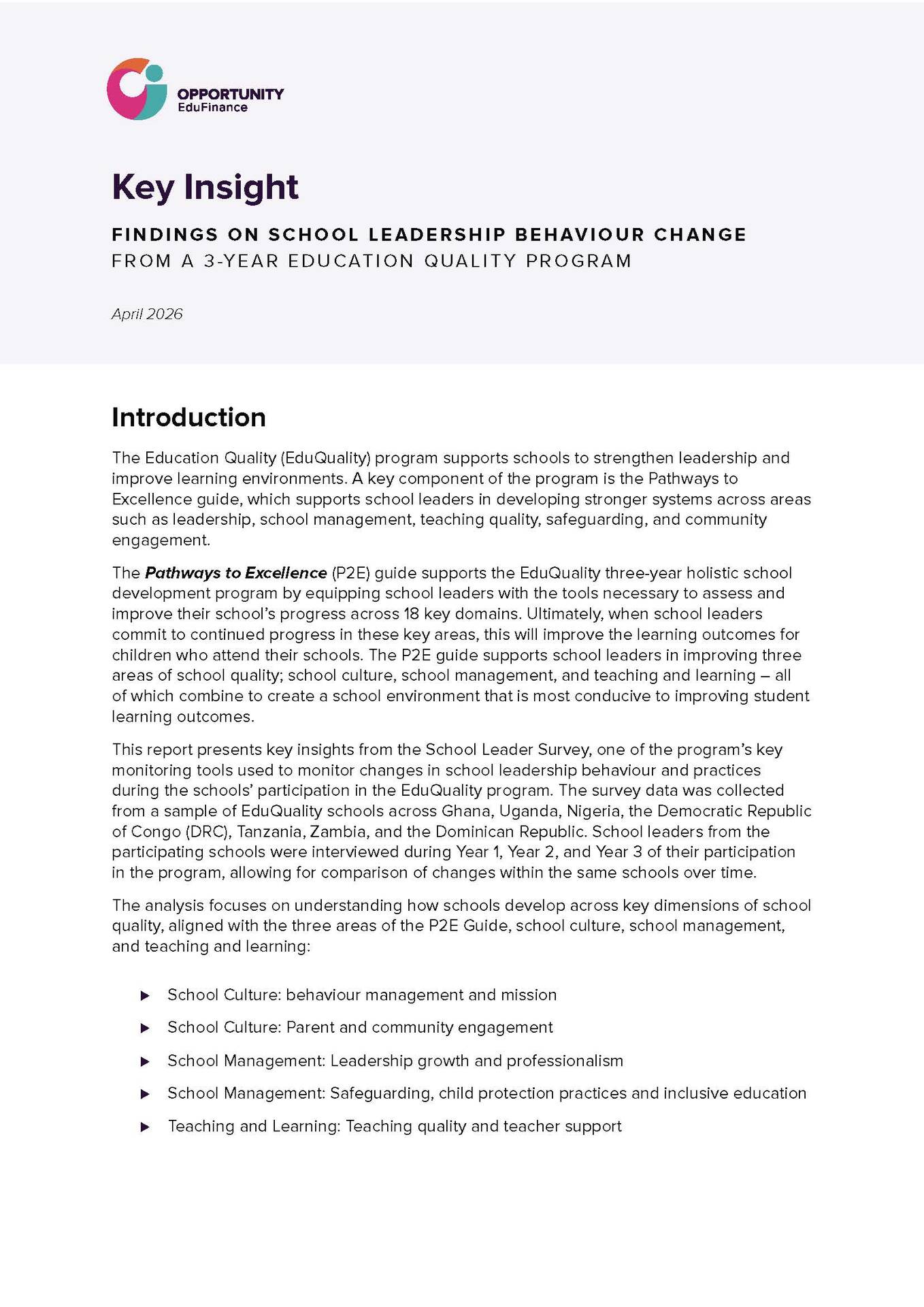
Findings On School Leadership Behavior Change From a 3-Year Education Quality Program
This report presents findings from a three‑year EduQuality program assessing changes in school leadership practices across multiple countries. It highlights progress in behavior management, planning, financial systems, teacher support, safeguarding, inclusion, and community engagement. The evidence shows many schools moving from informal practices to documented policies and stronger systems, leading to improved learning environments. While most schools demonstrate clear leadership improvement, the report also identifies ongoing challenges, particularly in shared decision‑making and governance, offering important lessons for improving education quality in low‑income contexts.
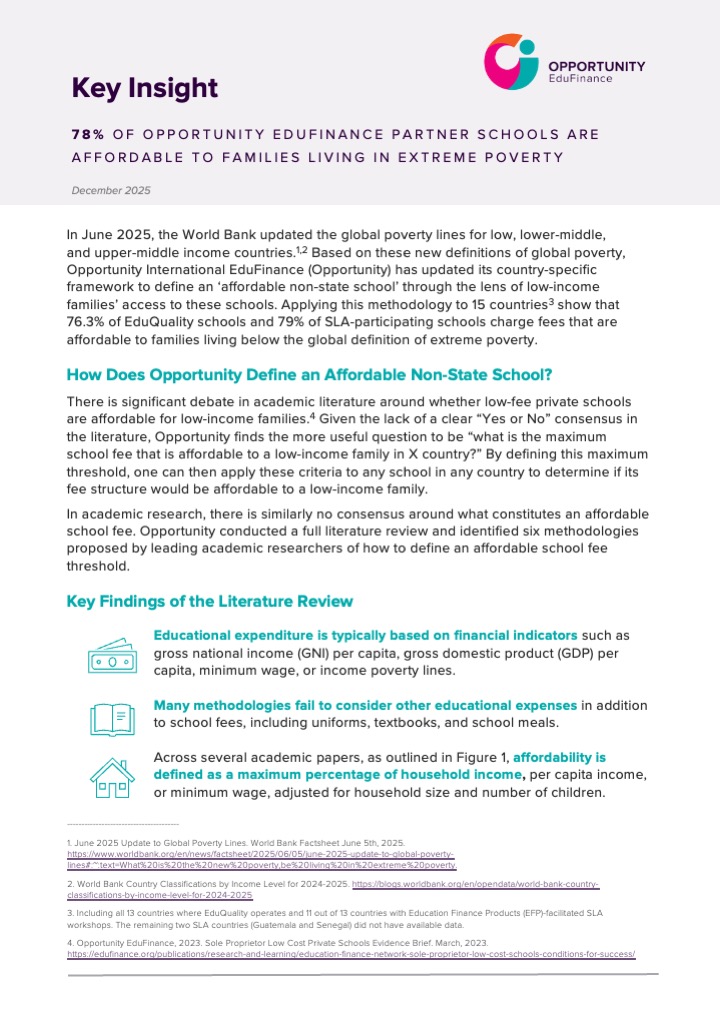
78% Of Opportunity Edufinance Partner Schools Are Affordable To Families Living In Extreme Poverty
Opportunity EduFinance analyzed school fee data from over 8,000 schools to assess affordability for families living below the global poverty line. Using the Barakat et al. (2012) methodology, affordability is defined as 4% of household income per child for education, with 70% allocated to school fees. Findings show that 76% of EduQuality partner schools and 79% of SLA-participating schools charge fees within affordable limits. The report highlights variations by country, school level, and registration status, and underscores the need for targeted support to ensure access for the poorest families.
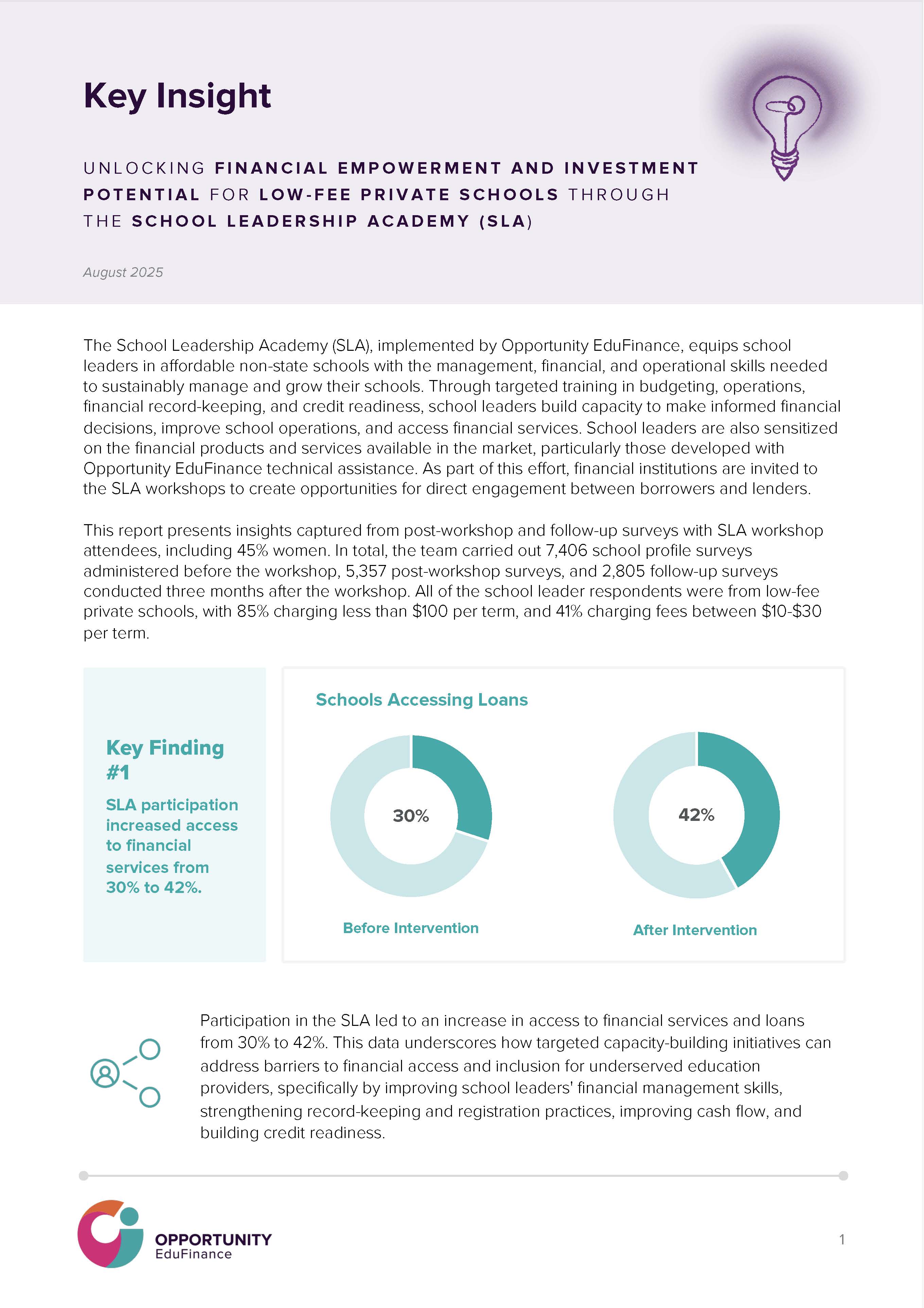
Unlocking Financial Empowerment And Investment Potential For Low-Fee Private Schools Through The School Leadership Academy (SLA)
Through targeted training in budgeting, operations, financial record-keeping, and credit readiness, school leaders build capacity to make informed financial decisions, improve school operations, and access financial services. School leaders are also sensitized on the financial products and services available in the market, particularly those developed with Opportunity EduFinance technical assistance. This report presents insights captured from post-workshop and follow-up surveys with SLA workshop attendees, including 45% women. In total, the team carried out 7,406 school profile surveys administered before the workshop, 5,357 post-workshop surveys, and 2,805 follow-up surveys conducted three months after the workshop. All of the school leader respondents were from low-fee private schools, with 85% charging less than $100 per term, and 41% charging fees between $10-$30 per term.
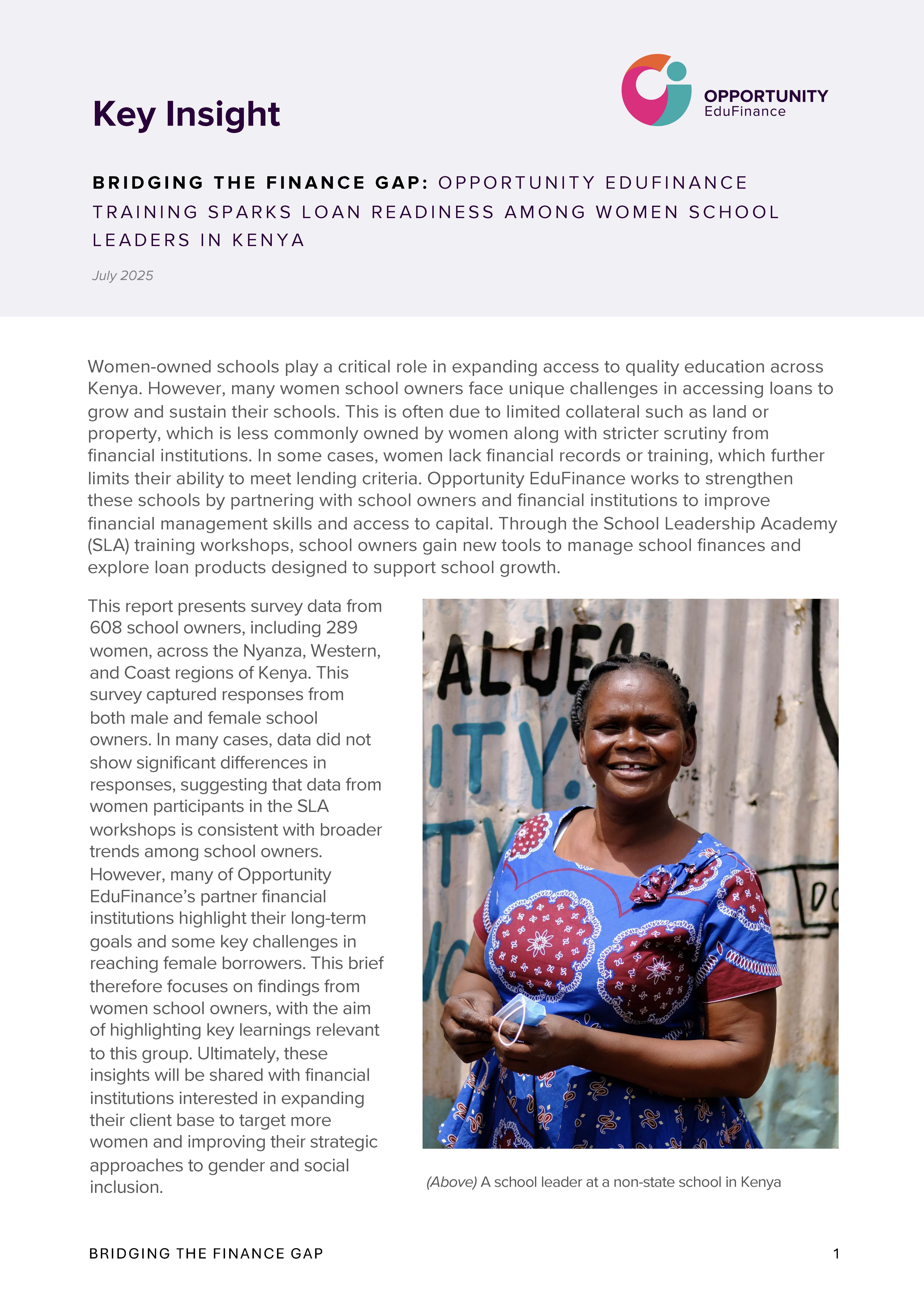
Bridging The Finance Gap: Opportunity Edufinance Training Sparks Loan Readiness Among Women School Leaders in Kenya
Following participation in School Leadership Academy training, the percentage of women school owners intending to apply for a loan nearly doubled, rising from 47% before the training to 81% after. 40% of women school owners surveyed at the training had never previously accessed any type of loan. Cash flow constraints and existing debt were the most commonly cited reasons for loan rejection among women school owners. While income levels are broadly similar across male and female school owners, women school owners in the Coast and Western regions report lower median earnings than their counterparts in the region. Among more nascent schools, women owners are likely to report a lower monthly school revenue than the overall sample, suggesting gaps in financial management.
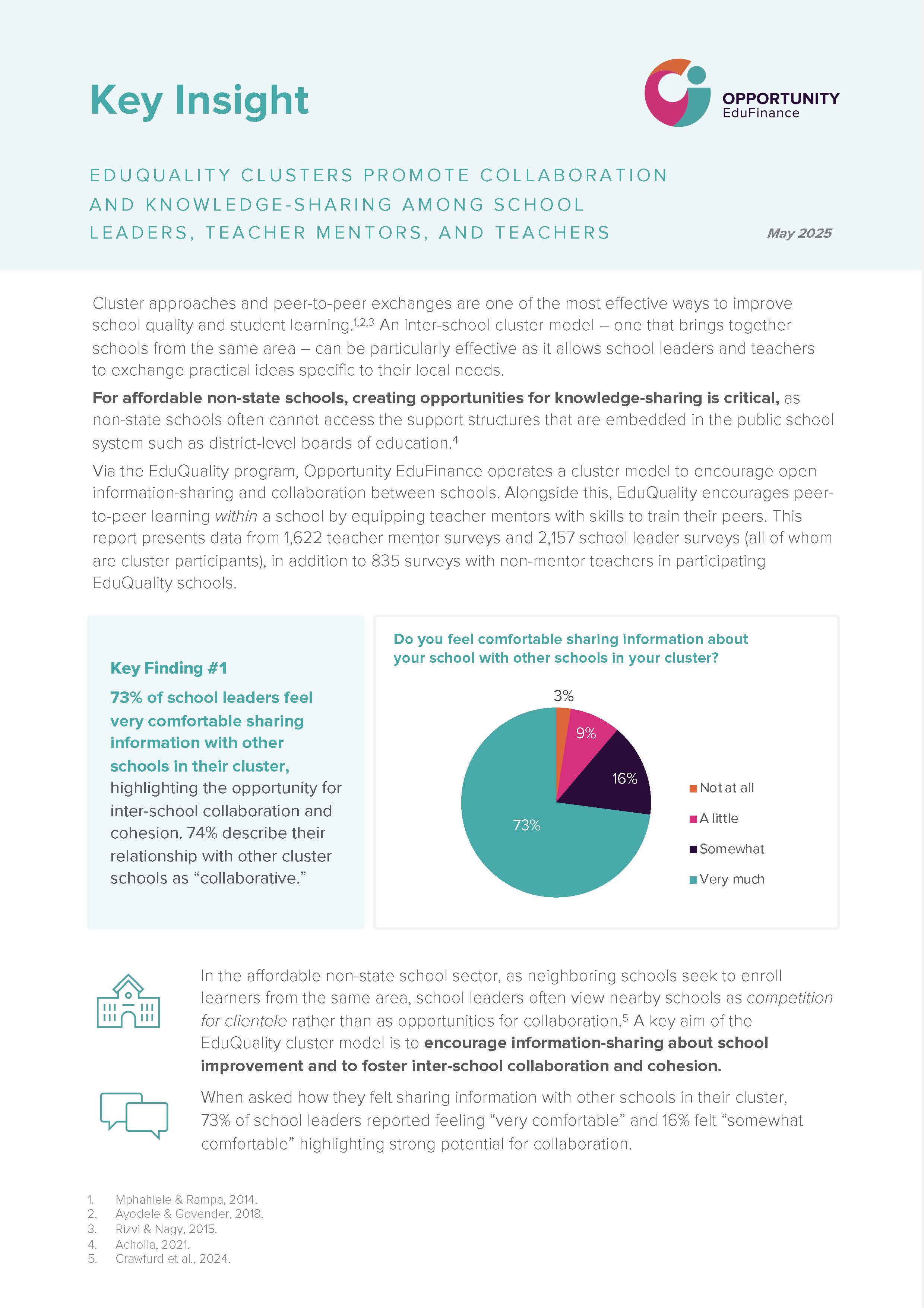
Eduquality Clusters Promote Collaboration and Knowledge-sharing Among School Leaders, Teacher Mentors and Teachers
73% of school leaders feel very comfortable sharing information with other schools in their cluster, highlighting the opportunity for inter-school collaboration and cohesion. 74% describe their relationship with other cluster schools as “collaborative.” An inter-school cluster model – one that brings together schools from the same area – can be particularly effective as it allows school leaders and teachers to exchange practical ideas specific to their local needs.
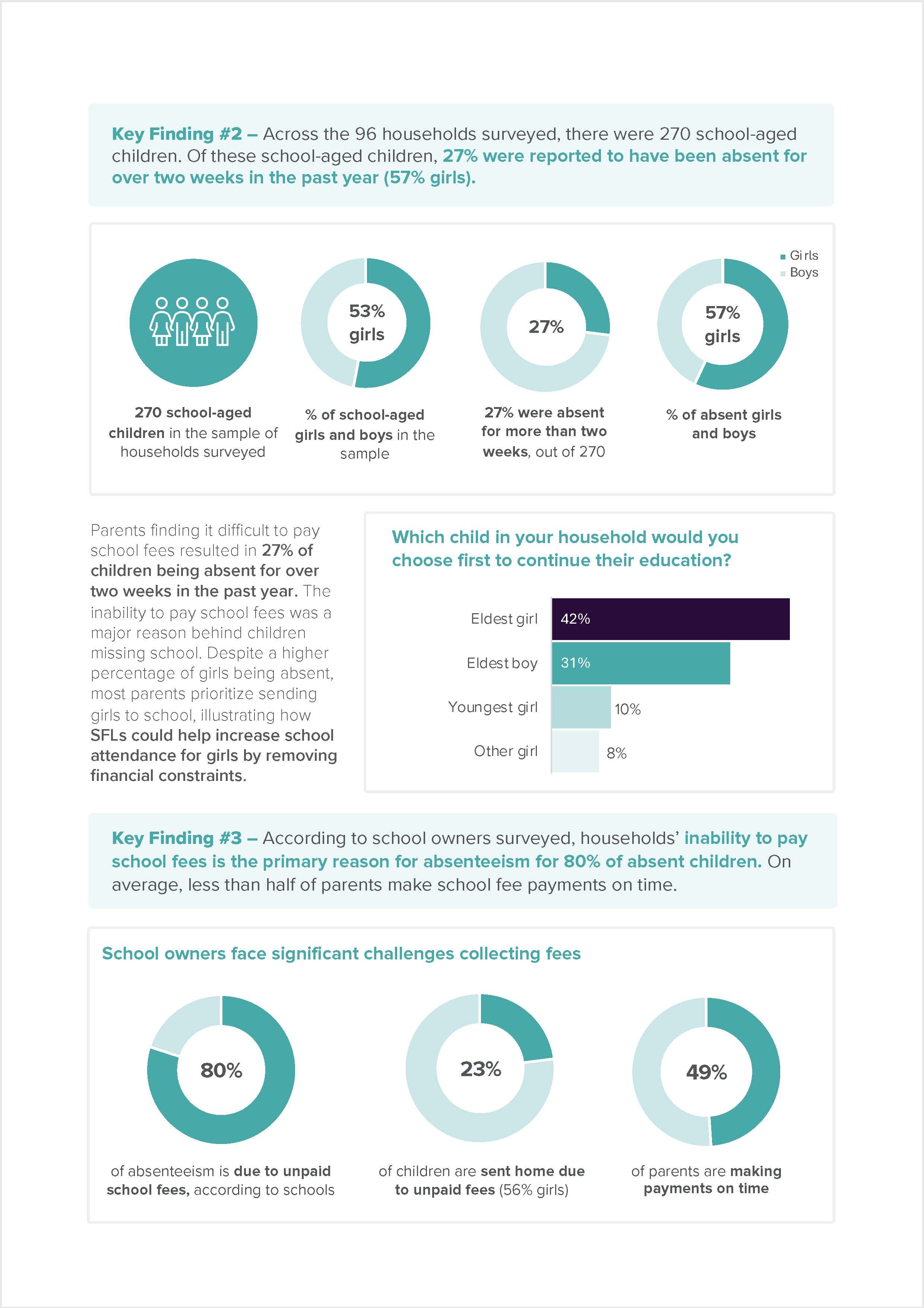
IN UGANDA, PARENTS RELY ON SCHOOL FEE LOANS TO RETURN THEIR OUT-OF-SCHOOL CHILDREN TO SCHOOL
There are 263 million children worldwide who remain out of school according to the latest UNESCO estimates1 – often due to inability to pay school fees. Opportunity EduFinance works with financial institutions to make capital more accessible to families without stable income through School Fee Loans (SFLs). SFLs help keep children in school in the face of unreliable household income, while also ensuring schools collect enough revenue to sustain school quality. The following report presents survey data on SFLs collected by Opportunity EduFinance in Uganda, with 96 parents and 57 school leaders.

94% of school partners report impact from the creation of their annual School Development Plans across various focus areas
In the past year, EduFinance collected 2,745 School Development Plans (SDPs) from 13 countries, guiding school improvement in areas like financial management and teaching quality. Monitoring revealed that, on average, 94% of schools reported improvements, with results across targeted areas ranging from 86% to 98%.

83% of schools in EduQuality show improvement in one or more education quality domains after 2 years
Partner school leaders in EduQuality, a program of Opportunity EduFinance, complete self-assessments annually by scoring their school on 18 domains of education quality. Analysis of data from three annual assessments (Year 1 baseline and beginning of Years 2 and 3) found 83% of schools reported improvements in their overall quality scores at the start of Year 3.

Endline classroom observations find continued improvement in teaching practice quality, with 59% of schools recording improved endline over baseline scores
Endline classroom observations were conducted in Year 3 of the EduQuality 3-year program and found most schools (59%) assessed at baseline and endline had improved their average scores, ranging between 47% - 75% improvement across countries.
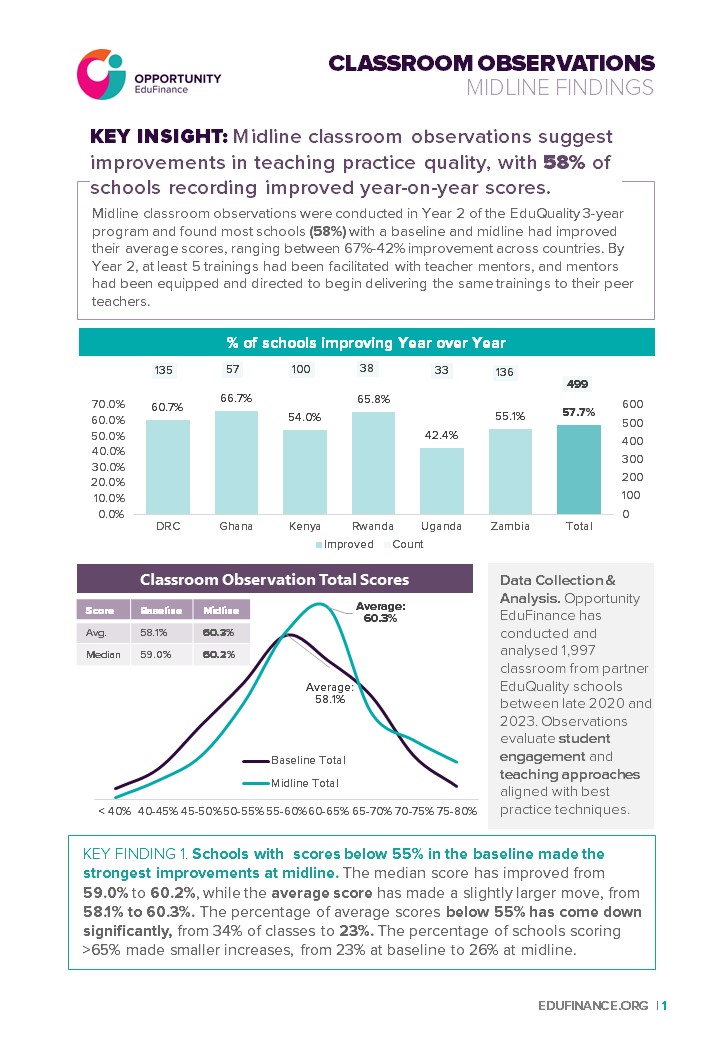
Midline classroom observations suggest improvements in teaching practice quality, with 58% of schools recording improved year-on-year scores
Midline classroom observations were conducted in Year 2 of the EduQuality 3-year program and found most schools (58%) with a baseline and midline had improved their average scores, ranging between 67%-42% improvement across countries.
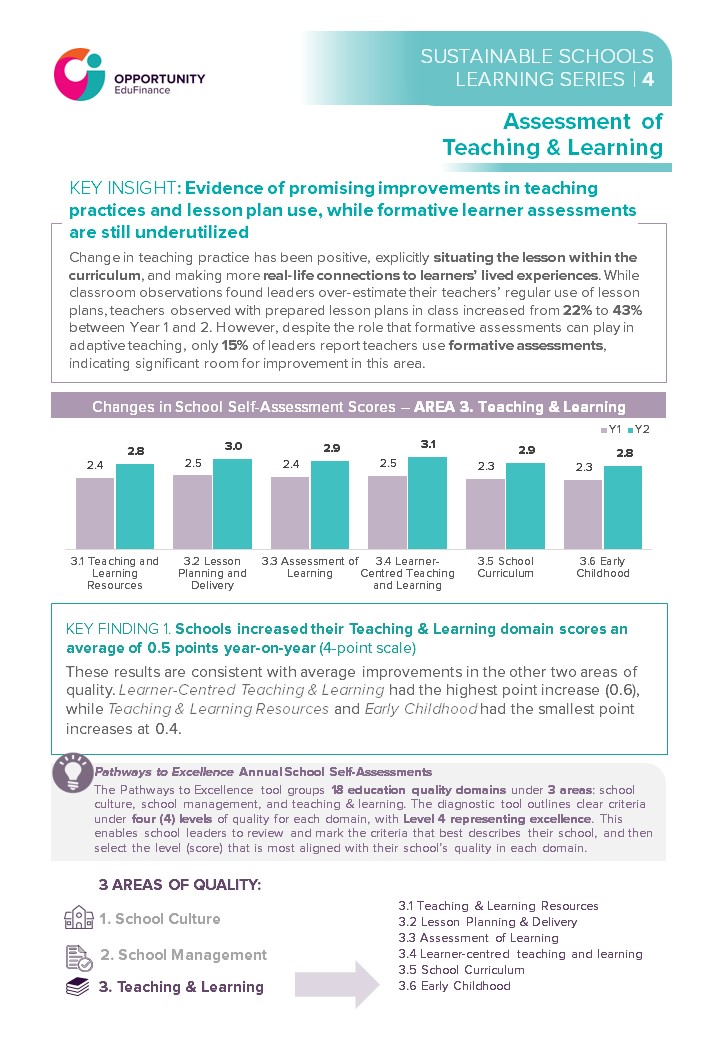
Evidence of promising improvements in teaching practices and lesson plan use, while formative learner assessments are still underutilized
Change in teaching practice has been positive, explicitly situating the lesson within the curriculum, and making more real-life connections to learners’ lived experiences. While classroom observations found leaders over-estimate their teachers’ regular use of lesson plans, teachers observed with prepared lesson plans in class increased from 22% to 43% between Year 1 and 2. However, despite the role that formative assessments can play in adaptive teaching, only 15% of leaders report teachers use formative assessments, indicating significant room for improvement in this area.
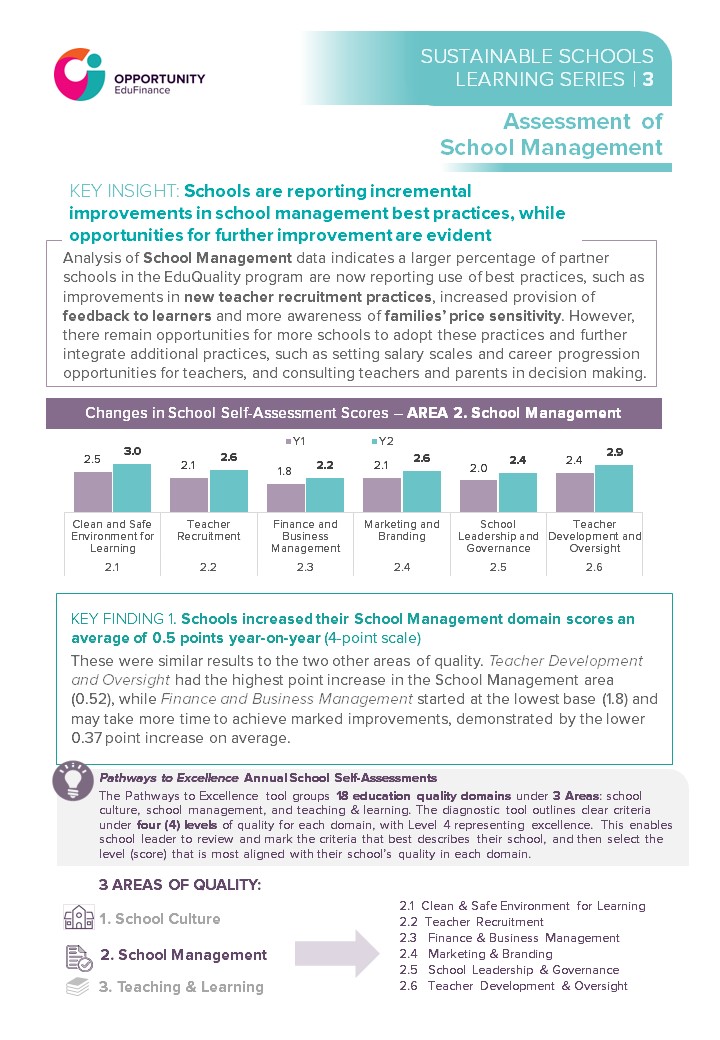
Schools are reporting incremental improvements in school management best practices, while opportunities for further improvement are evident
Analysis of School Management data indicates a larger percentage of partner schools in the EduQuality program are now reporting use of best practices, such as improvements in new teacher recruitment practices, increased provision of feedback to learners and more awareness of families’ price sensitivity.
.JPG)
Schools make significant 'quick win' improvements in quality between first and second years of EduQuality programme
Schools making 'quick win' investments in the area of School Culture have increased the average self-assessment scores for 50% of schools. This includes writing behaviour management policies, setting clear rules and expectations for learners, collaborating with other schools, providing extracurricular activities and even holding more frequent staff meetings. Other more challenging areas for improvement, such as the provision of an inclusive education policy, may be more difficult to achieve in the short-term.
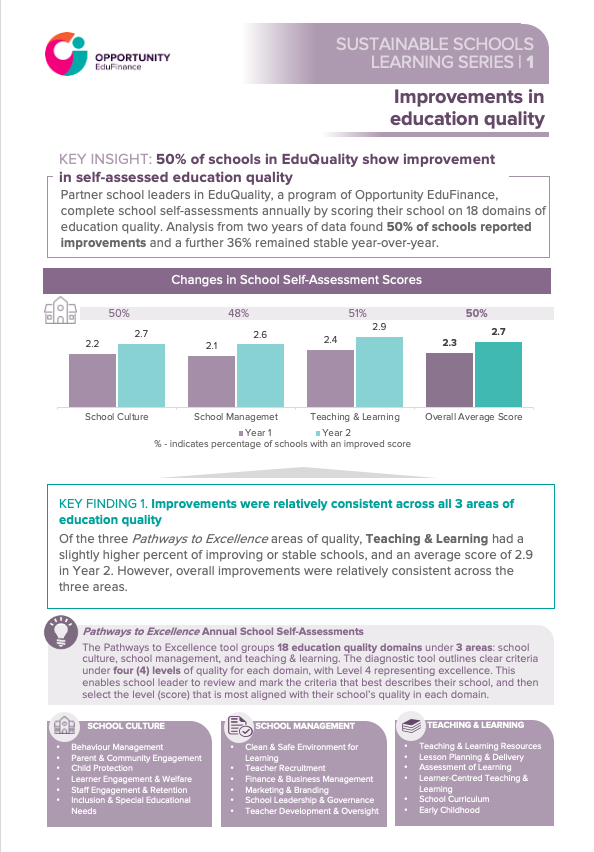
50% of schools in EduQuality show improvement in self-assessed education quality
Partner school leaders in EduQuality, a program of Opportunity EduFinance, complete school self-assessments annually by scoring their school on 18 domains of education quality. Analysis from two years of data found 50% of schools reported improvements and a further 36% remained stable year-over-year.
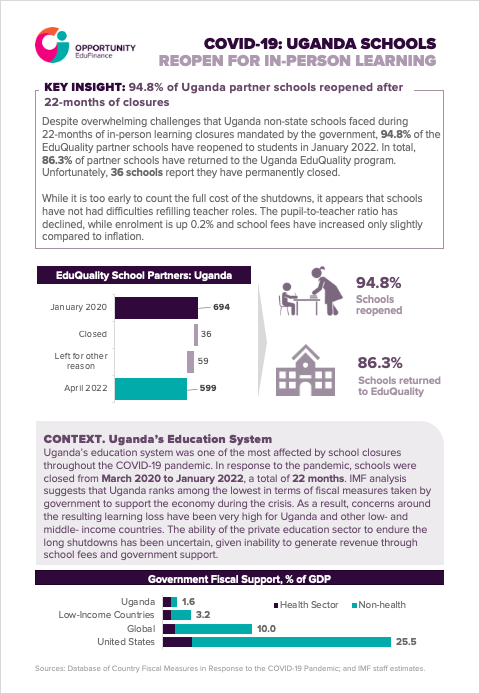
94.8% of Uganda partner schools reopened after 22-months of closures
Despite overwhelming challenges that Uganda non-state schools faced during 22-months of in-person learning closures mandated by the government, 94.8% of the EduQuality partner schools have reopened to students in January 2022.
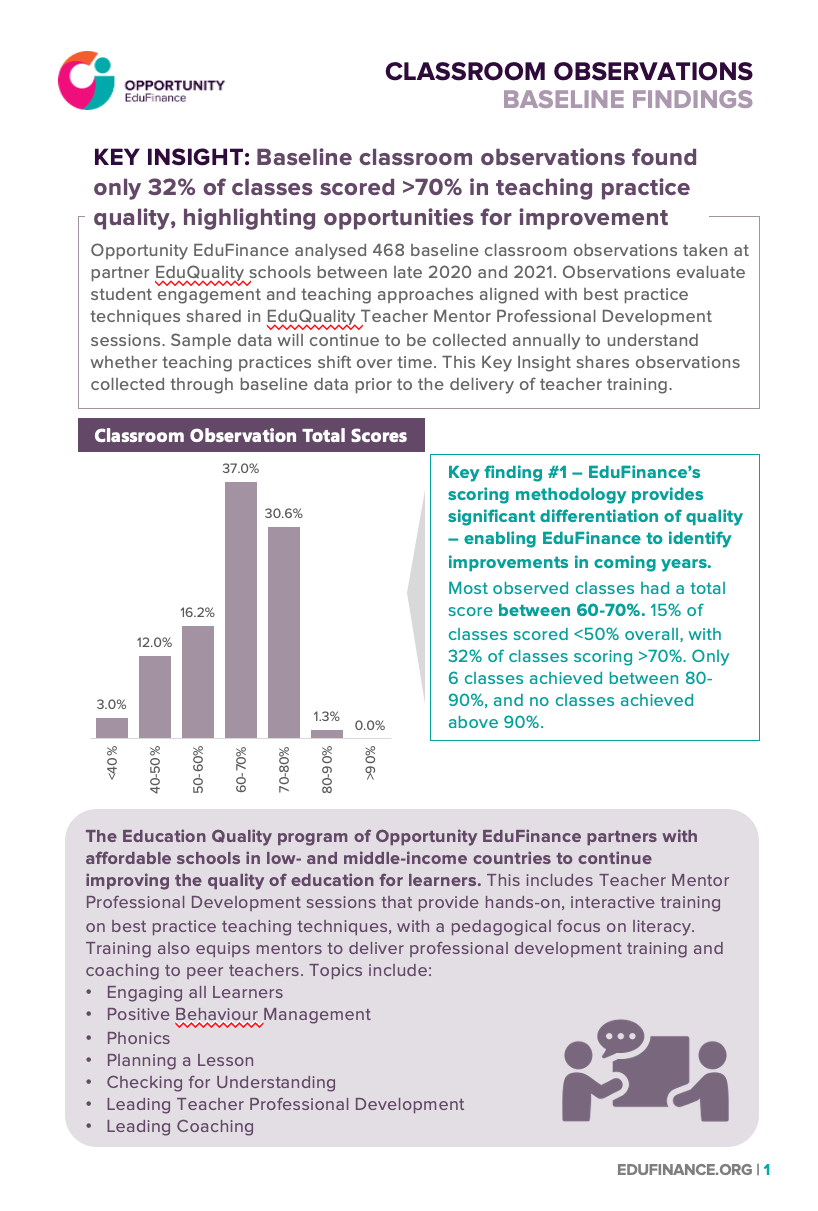
Baseline classroom observations found only 32% of classes scored >70% in teaching practice quality, highlighting opportunities for improvement
Opportunity EduFinance analysed 468 baseline classroom observations taken at partner EduQuality schools between late 2020 and 2021. Observations evaluate student engagement and teaching approaches aligned with best practice techniques shared in EduQuality Teacher Mentor Professional Development sessions.
More EduQuality partner schools are demonstrating an increase in effective school management practices
Survey data collected from affordable non-state school leaders in the Education Quality program shows early evidence of more schools beginning to use effective school management practices.
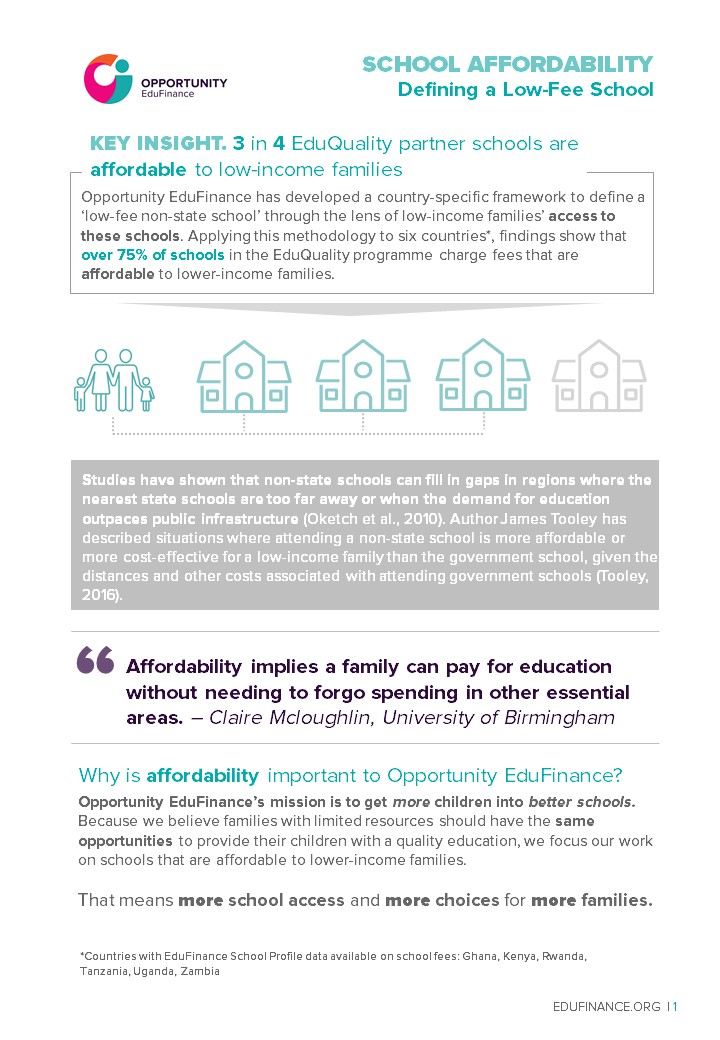
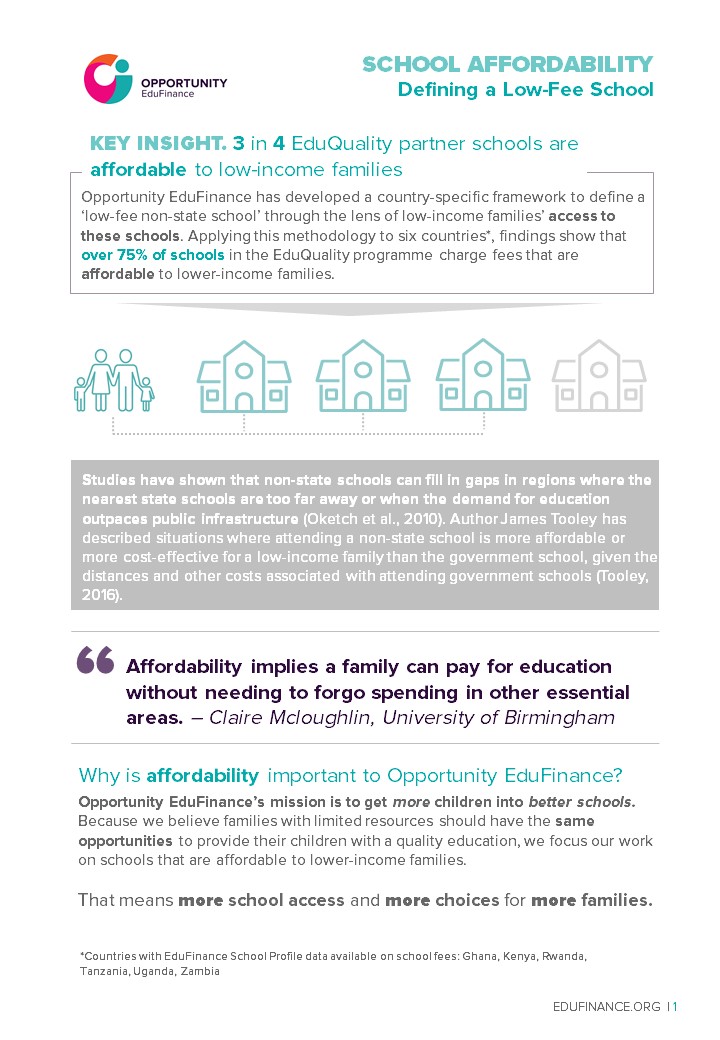
3 in 4 EduQuality partner schools are affordable to low-income families.
Opportunity EduFinance has developed a country-specific framework to define a ‘low-fee non-state school.'
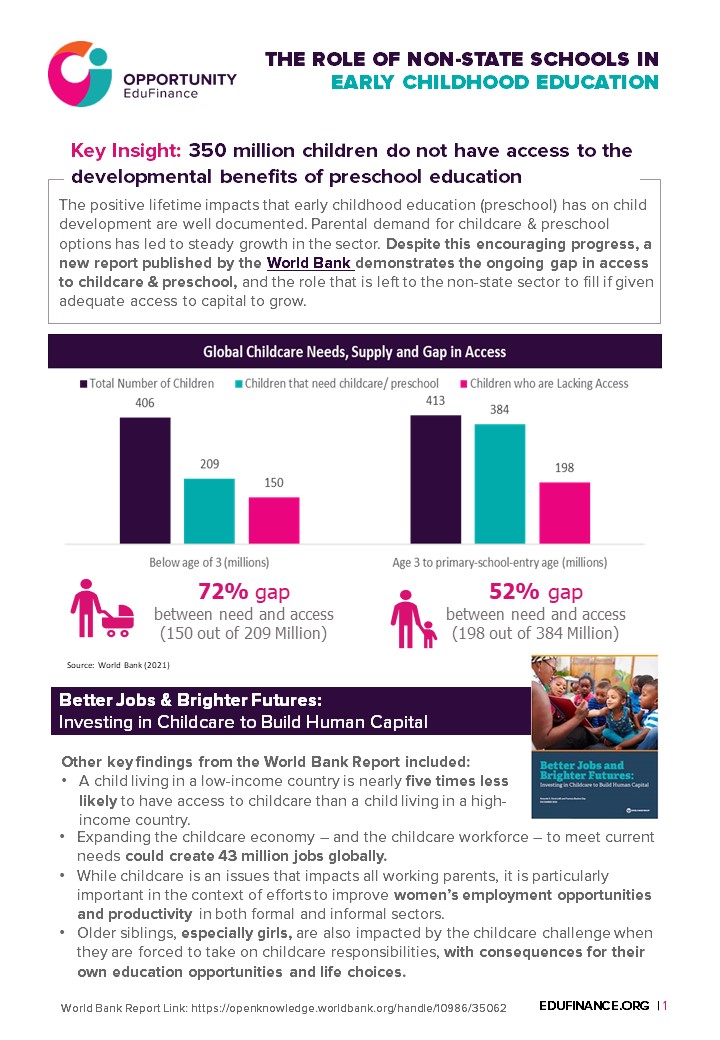
The role of non-state schools in early childhood education
A new report published by the World Bank demonstrates the ongoing gap in access to childcare & preschool, and the role that is left to the non-state sector to fill if given adequate access to capital to grow.
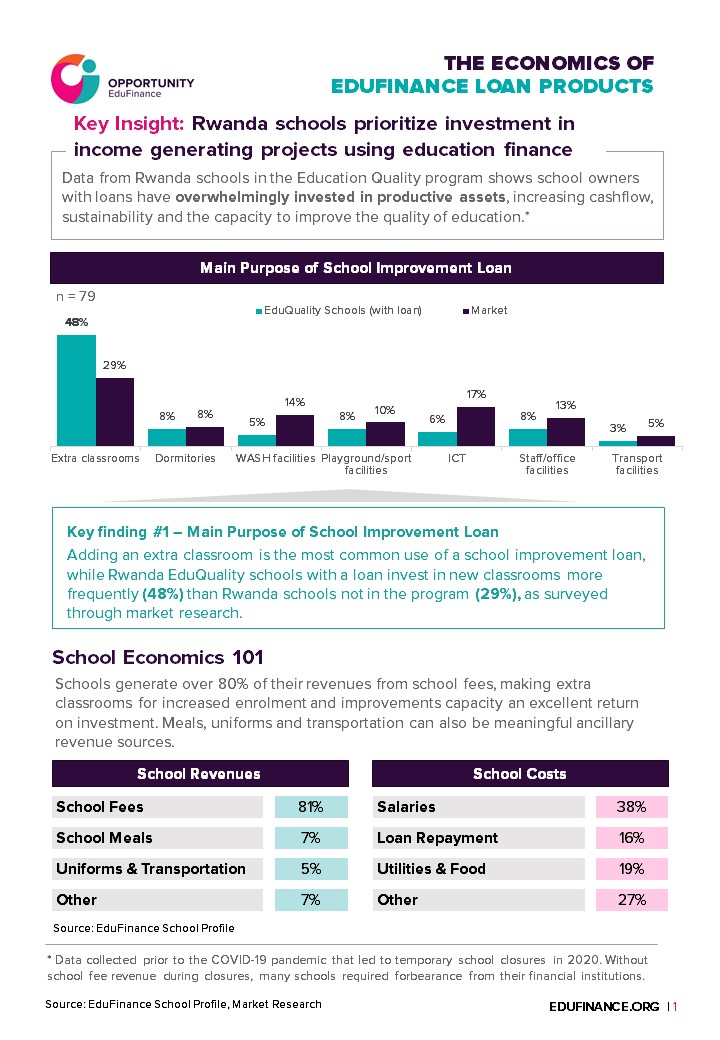
Rwanda schools prioritize investment in income generating projects using education finance
Data from Rwanda schools in the EduQuality program shows school owners with loans have overwhelmingly invest in productive assets, increasing cashflow, sustainability and the capacity to improve the quality of education.
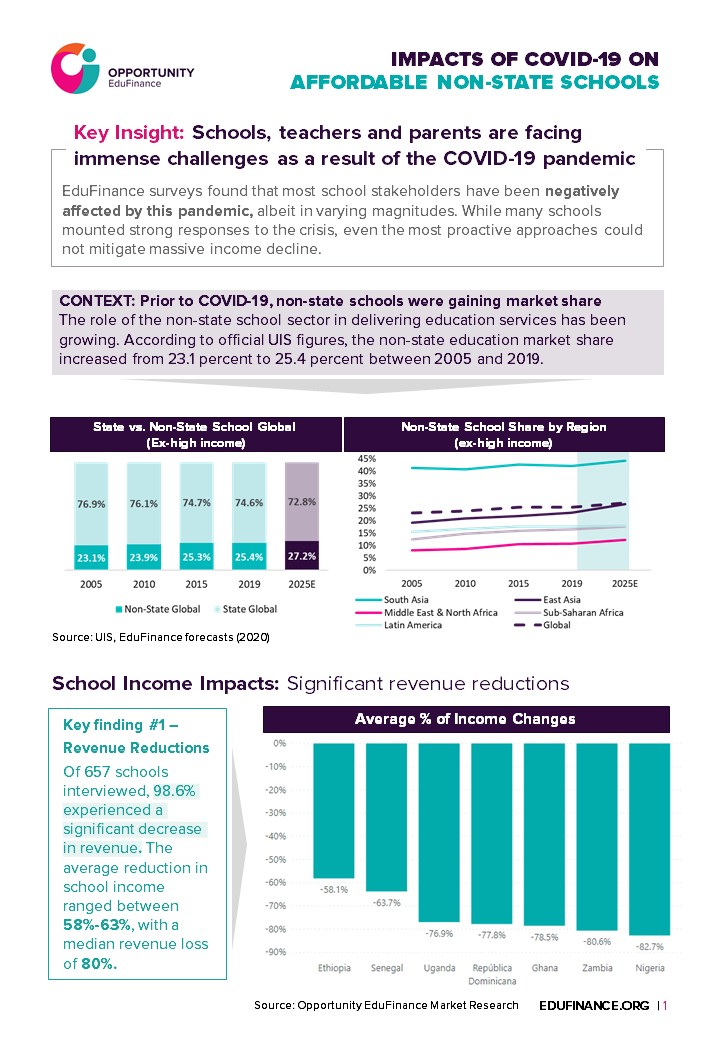
Schools, teachers and parents are facing immense challenges as a result of the Covid-19 pandemic
EduFinance surveys found that most school stakeholders have been negatively affected by this pandemic, facing significant income decline.
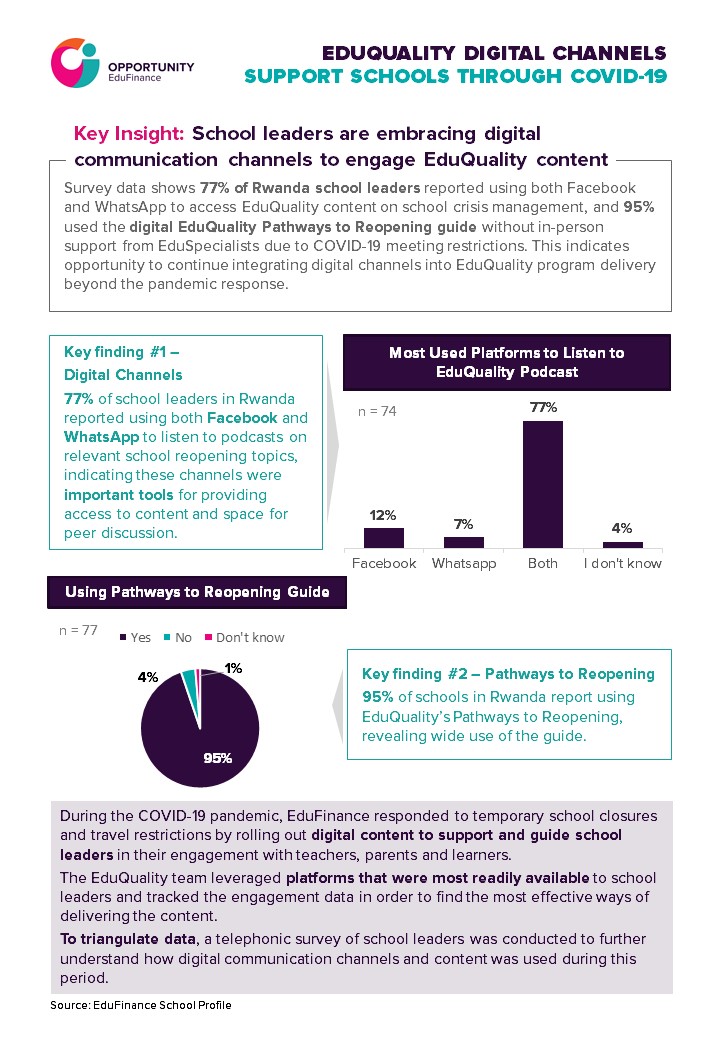
School leaders are embracing digital communication channels to engage EduQuality content
Survey data shows 77% of Rwanda school leaders reported using both Facebook and WhatsApp to access EduQuality content on school crisis management, and 95% used the digital EduQuality Pathways to Reopening guide.
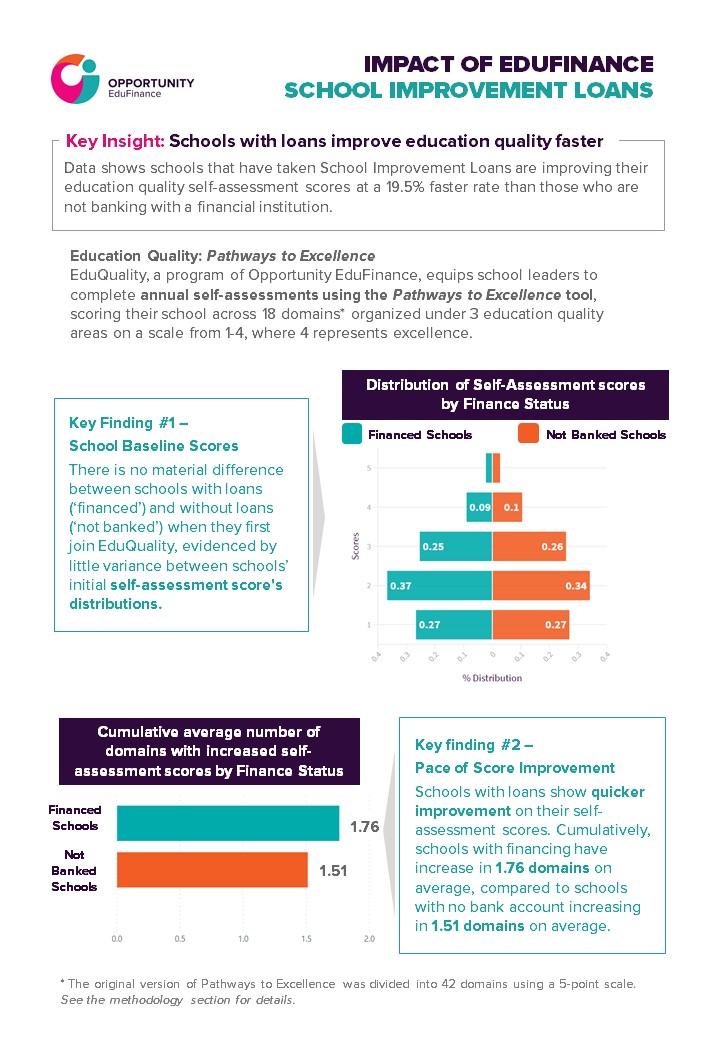
Schools with loans improve education quality faster
Data shows schools that have taken School Improvement Loans are improving their education quality self-assessment scores at a 19.5% faster rate than those who are not banking with a financial institution.
Non-state schools support refugee students
Survey data shows 37% of non-state affordable schools linked to EduFinance financial institution partners provide education to refugee students.
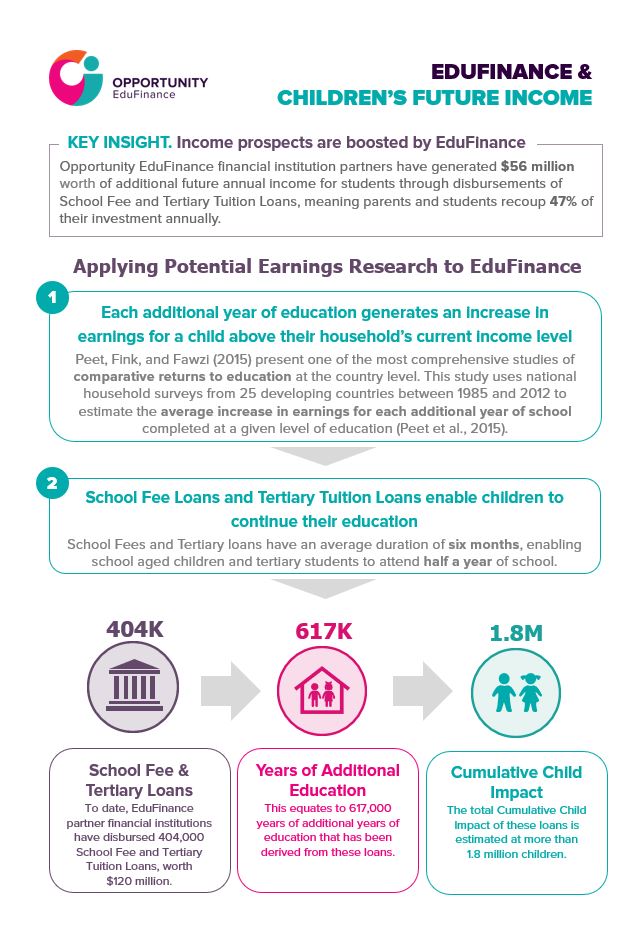
$56M worth of additional future annual income generated by School Fee and Tertiary Tuition loans
Opportunity EduFinance financial institution partners have generated $56 million worth of additional future annual income for students through disbursements of School Fee and Tertiary Tuition Loans, meaning parents and students recoup 47% of their investment annually.
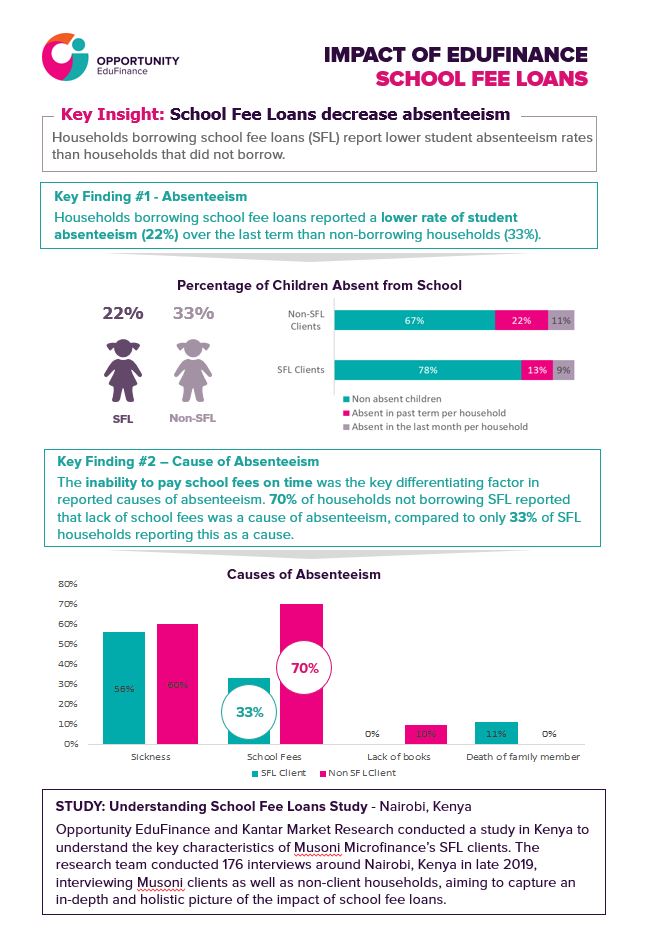
School Fee Loans decrease absenteeism
Households borrowing school fee loans report lower student absenteeism rates than households that did not borrow.
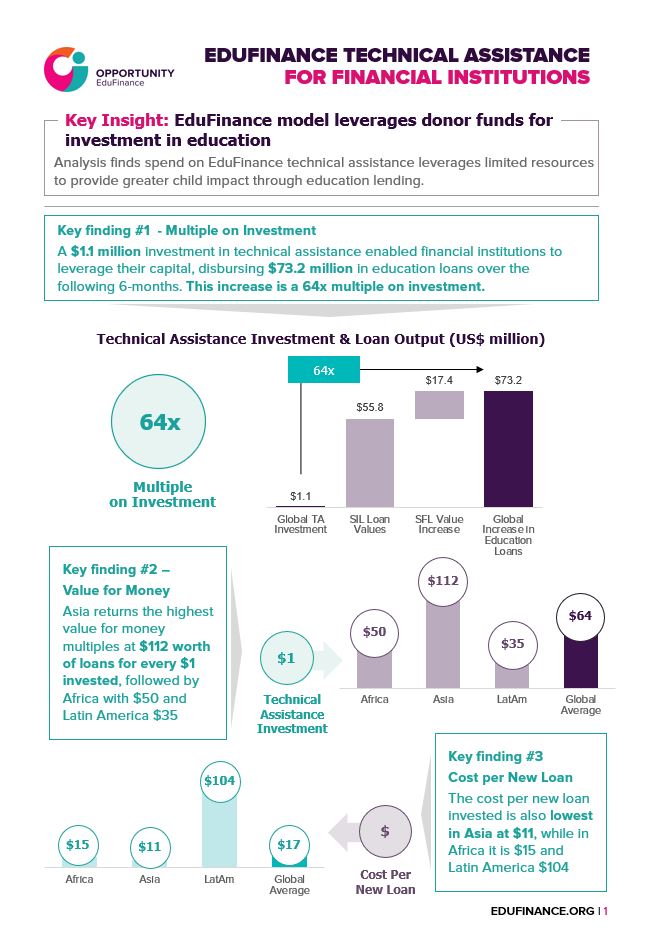
For every US$1 invested in EduFinance Technical Assistance, financial institutions lend US$64 on average
Analysis finds spend on EduFinance technical assistance leverages limited resource to provide greater child impact through education lending
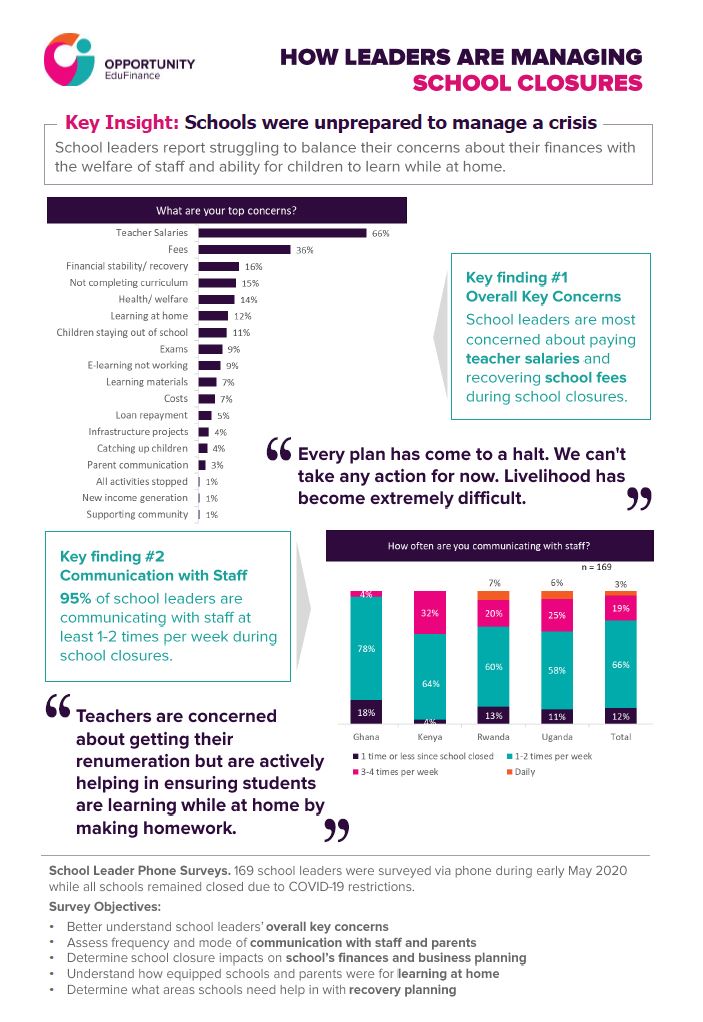
Schools were unprepared to manage a crisis when COVID-19 forced closures
School leaders report struggling to balance their concerns about their finances with the welfare of staff and ability for children to learn while at home
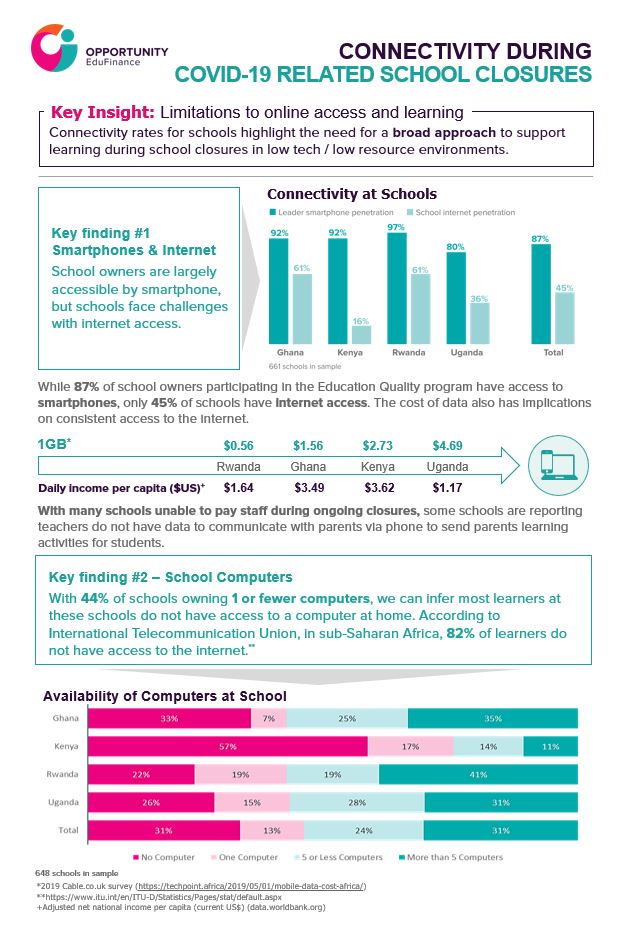
Schools & learners have limited online access for learning during COVID-19
Connectivity rates for schools highlight the need for a broad approach to support learning during school closures in low tech / low resource environments.
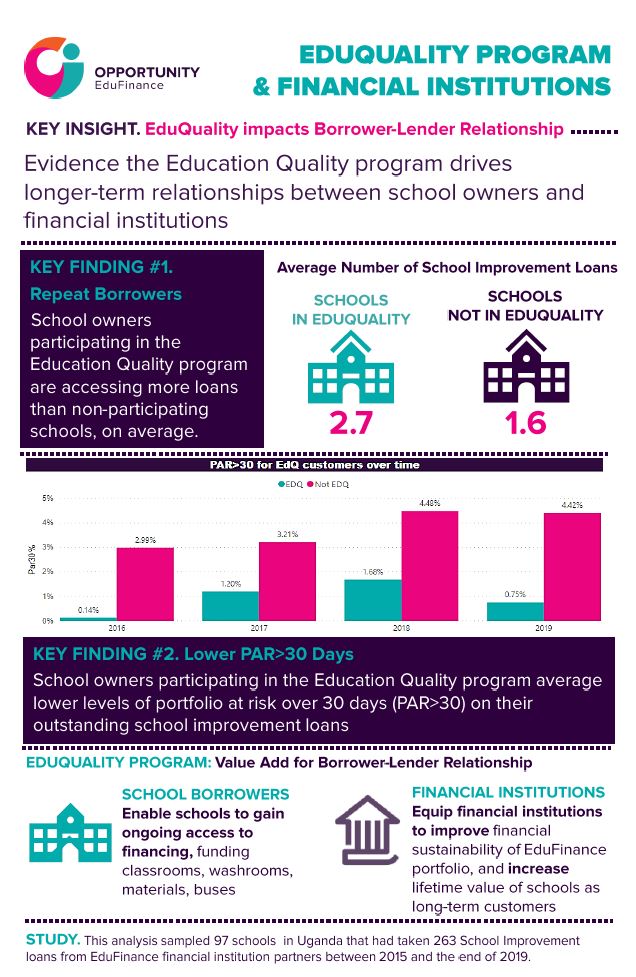
EduQuality schools access more loans & have lower portfolio at risk than school borrowers not in the program
Evidence suggests the Education Quality program drives longer-term relationships between school owners and financial institutions.
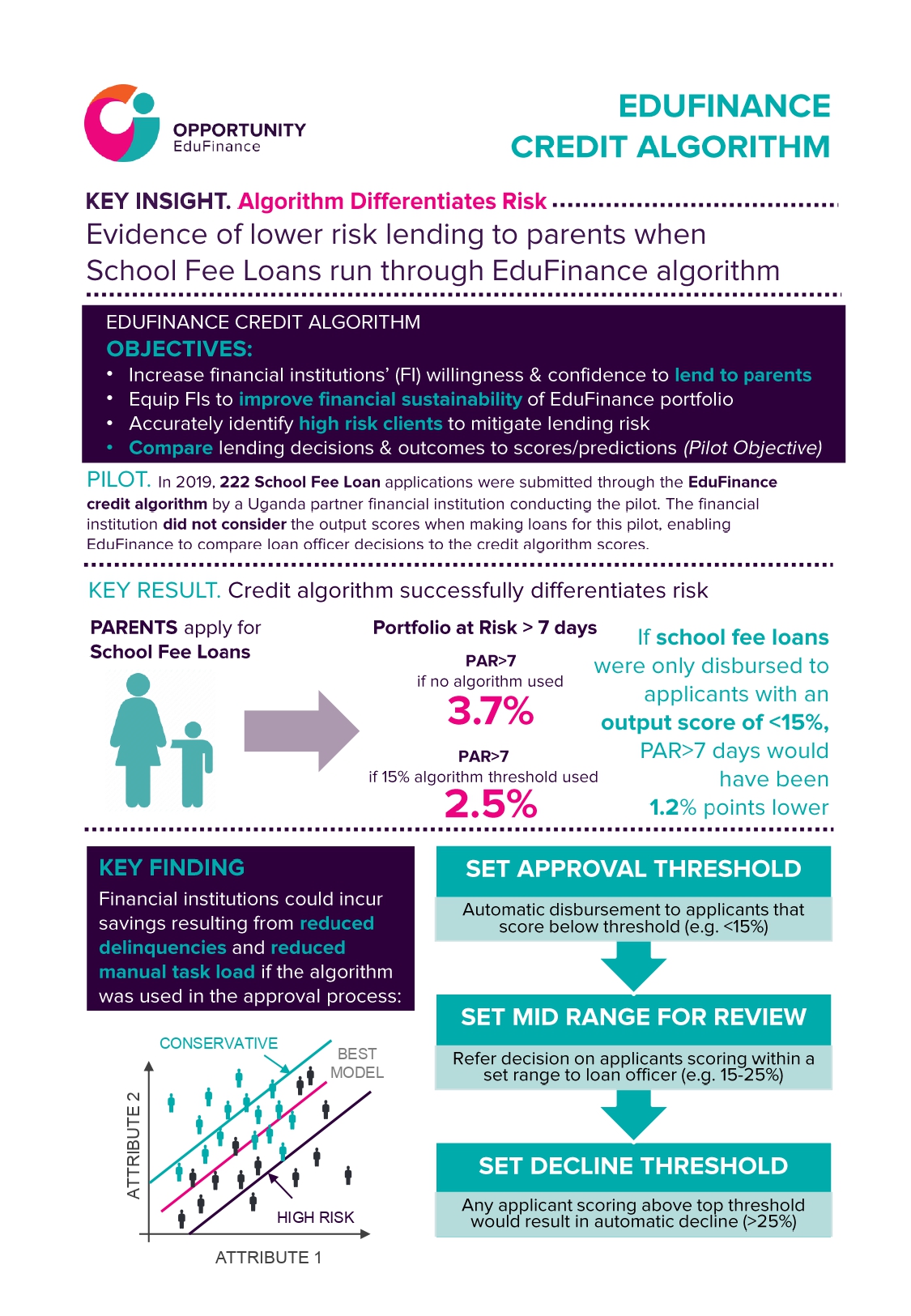
School Fee Loans run through EduFinance algorithm show lower risk lending to parents
There is evidence of lower risk lending to parents when School Fee Loans are run through the EduFinance Credit Algorithm.
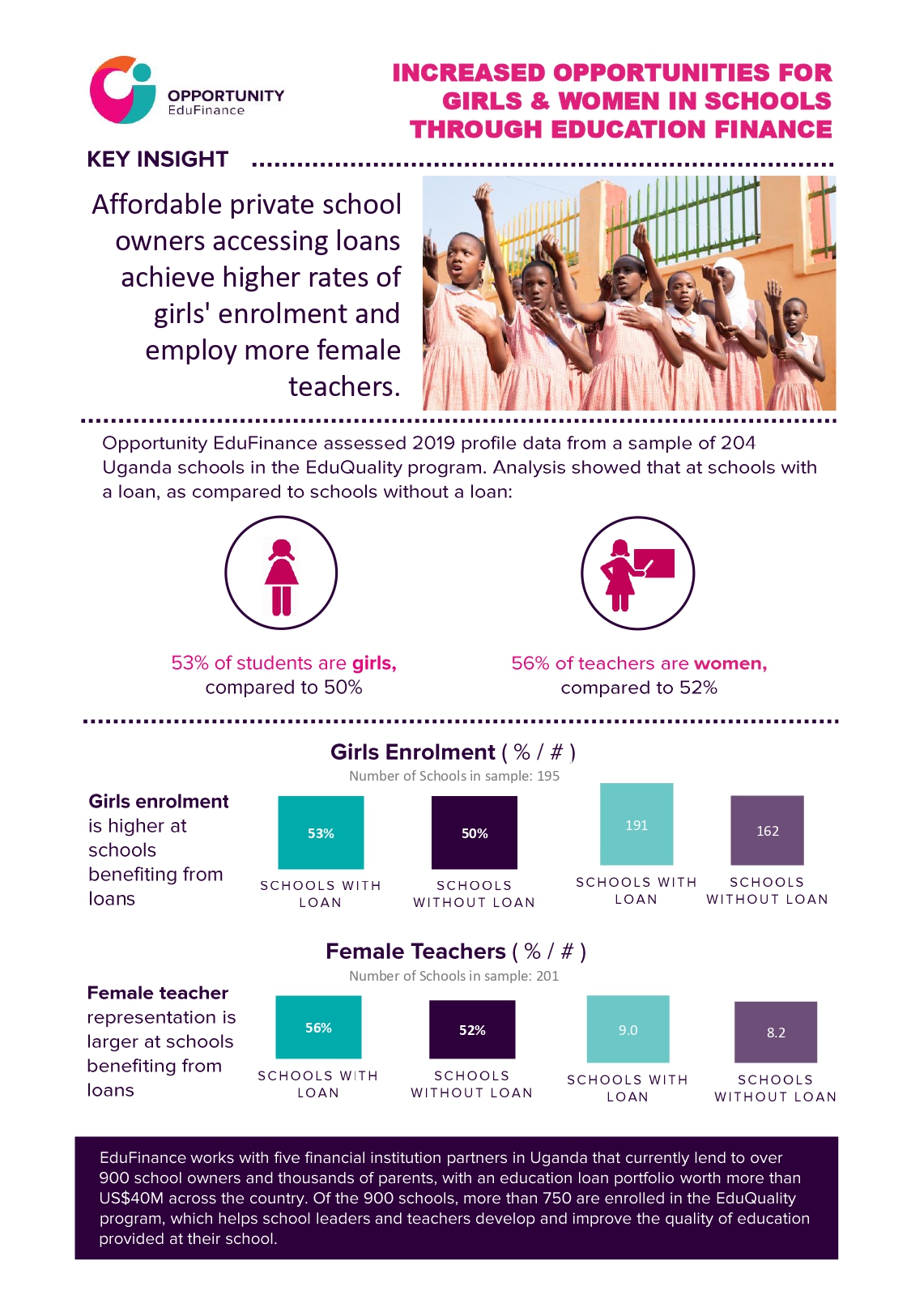
Increased opportunities for Girls and Women in Schools through education finance
Affordable private school owners accessing loans achieve higher rates of girls' enrolment and employ more female teachers in EduFinance partner schools enrolled on the EduQuality program in Uganda.
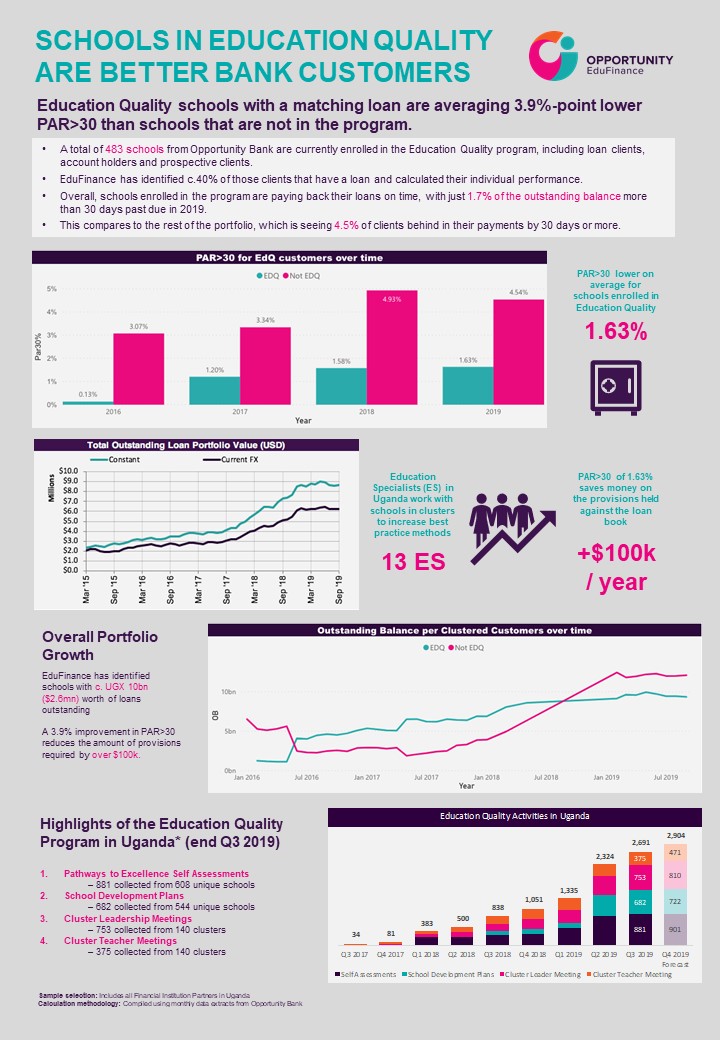
Schools in EduQuality are better Bank Customers
Schools in EduQuality with a matching loan are averaging 3.9% point lower PAR>30 than schools not in the program